Machiavelli’s The Prince Deeper Elucidation (Part-8) | Secrets of Power & Leadership |

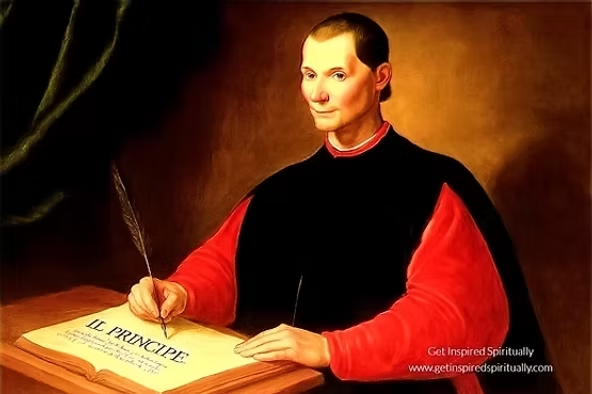
Power. Deception. Survival. In 1513, Niccolò Machiavelli wrote a book that shattered illusions and exposed the raw mechanics of leadership: The Prince. This was no idealistic vision—it was a ruthless manual for rulers on how to win, hold, and wield authority, even if it meant bending morality itself. Centuries later, it still stands as one of the most controversial and provocative guides to power ever written.
We publish book summaries on political philosophy and leadership because understanding these topics is crucial for obtaining power. Competent leaders must gain power to prevent uninformed individuals from causing harm. Spirituality is also about making the world, a better place to live.
Overview of the Last Post:
We covered 'States Won by The New Ruler’s Own Forces and Abilities:'
In examining new states where both the ruler and government are entirely new, it is crucial to consider notable examples. People often imitate others yet cannot perfectly replicate another's path. A wise leader follows the trail of greatness, aiming to reflect some of their brilliance. When a ruler seizes power, their ability to maintain control relies on their talents or circumstances.
Transitioning from an ordinary citizen to a ruler requires either skill or favorable conditions, with those relying less on luck enduring longer. Moses, Cyrus, Romulus, and Theseus exemplify rulers who rose through their own qualities rather than luck. Their success stemmed from seizing opportunities presented by circumstances. Moses led the Israelites out of Egypt, Romulus founded Rome, Cyrus capitalized on Persian unrest, and Theseus emerged during Athenian defeat. Their exceptional qualities allowed them to recognize and exploit these chances, bringing glory to their nations. Men who achieve sovereignty through their own abilities face challenges in establishing their states but manage to maintain control once established. Initial struggles arise from implementing new systems.
Reformers create enemies among beneficiaries of the old system, while potential supporters hesitate. A leader who depends on others is likely to fail, while one with resources can impose plans with minimal risk. Visionaries with armed support succeed, whereas those without fail. Moses, Cyrus, Theseus, and Romulus succeeded in enforcing respect for their laws with armed force. In contrast, Girolamo Savonarola was overthrown due to lack of means to maintain support. Any new ruler introducing changes must rely on personal abilities to overcome challenges. Once obstacles are surmounted, the ruler can safely enjoy power. Hiero of Syracuse rose to kingship due to his exceptional qualities. His ascent began when elected military commander amidst threats, leading to kingship. As king, Hiero restructured the military and shifted alliances to secure power. This strategic groundwork required effort but made maintaining his rule relatively easy.
In this post, we will explore Chapter 7: States won by lucky circumstance and someone else’s armed forces, examining the advantages and challenges faced by an ordinary citizen who rises to power through the aid of another's military forces.
Chapter 7: States Won by Lucky Circumstance and Someone Else’s Armed Forces

A private citizen who becomes a ruler through sheer good fortune may find it easy to acquire power but will face significant challenges in maintaining it. Such individuals ascend quickly, often with external support, but encounter numerous difficulties once in power. This occurs when someone buys or is granted a territory, as seen with certain Ionian and Hellespontine rulers who were installed by Darius for his benefit. Similarly, emperors who rise from private life by bribing the military depend entirely on the fickle support of those who elevated them. Lacking innate leadership skills and a reliable army, they struggle to retain power. Like rapidly growing regimes with shallow roots, they are prone to collapse at the first sign of trouble.
A ruler who gains power unexpectedly must either possess extraordinary talent to establish necessary foundations or rely on luck. Consider Francesco Sforza and Cesare Borgia as examples. Sforza, through his abilities and determination, rose from commoner to Duke of Milan and maintained his position with ease. Conversely, Cesare Borgia, known as Duke Valentino, inherited his lands through his father’s influence but lost them after his father’s death. Despite his efforts to secure his rule, Borgia's downfall was due to misfortune rather than incompetence. His strategies laid strong foundations, and his approach serves as valuable guidance for new rulers. Pope Alexander VI's ambition to empower his son, Borgia, faced numerous challenges, yet Borgia's groundwork was commendable.
Pope Alexander's Strategic Maneuvers and Borgia's Rise to Power

Pope Alexander VI faced challenges in making his son a ruler, given the opposition from the Duke of Milan and the Venetians, who protected Faenza and Rimini. The Italian armies, led by families like the Orsini and Colonna, were wary of papal expansion and unreliable allies. To overcome this, Alexander needed to destabilize his rivals' power, a task made easier by the Venetians' desire to bring the French back to Italy.
By annulling King Louis’s first marriage, the pope enabled the French king’s strategic entry into Italy. Once Louis captured Milan, he decisively supported Alexander’s son, Cesare Borgia, in conquering Romagna, a feat that would have been impossible without French support.
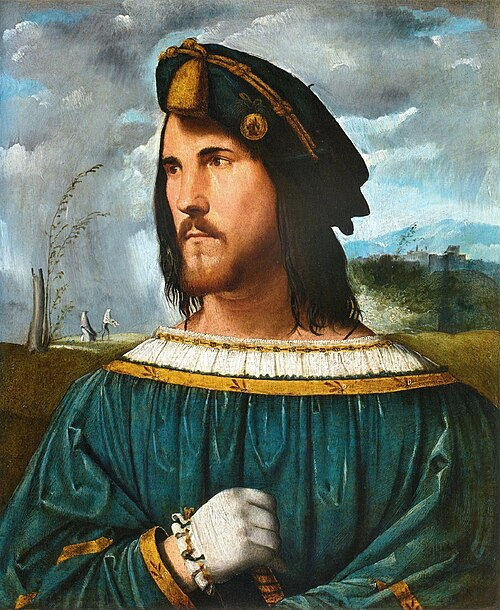
Cesare Borgia (1475–1507) was the most prominent illegitimate son of Pope Alexander VI (Rodrigo Borgia) and his mistress Vannozza Catanei. A central figure of the Italian Renaissance, he was a formidable politician and military leader who, with his father's backing, sought to unify Italy, serving as the inspiration for Machiavelli’s The Prince
Borgia, having defeated the Colonna family, faced challenges in maintaining Romagna and expanding his territory. His concerns were twofold: the loyalty of his own army and the French policy. He relied on the Orsini family's forces but feared their obedience would falter, jeopardizing his past and future conquests. His suspicions were confirmed when, after capturing Faenza, his soldiers showed little enthusiasm for attacking Bologna. Similarly, after taking Urbino, the French king's insistence that he withdraw from Tuscany clarified France's stance. Determined to avoid dependence on others, Borgia weakened the Orsini and Colonna factions by enticing their supporters with high salaries and strategic appointments, aligning them with his interests.
A statesman's success hinges on his ability to weaken the enemy and consolidate his strength, ensuring control over his regime.
In a swift turn of events, old loyalties dissolved in favor of the duke, who seized the opportunity to dismantle the Colonna leaders and awaited the right moment to target the main Orsini figures. When the Orsini realized the threat posed by Borgia's growing power, they convened at Magione, sparking rebellion and unrest. Despite these challenges, Borgia, with French support, regained his standing. To avoid testing loyalties further, he resorted to cunning, deceiving even the Orsini into making peace. Paulo Orsini, acting as mediator, was lavishly received by Borgia, who lured the unsuspecting Orsinis to Senigallia, where he eliminated their leaders and converted their followers. This solidified Borgia's control over Romagna and the Duchy of Urbino, gaining local support through prosperity. Upon taking Romagna, he found it plagued by poor leadership and rampant injustice, prompting him to enforce effective governance to restore order and respect for authority.
Strategic Governance and Power Consolidation: Lessons from Ramiro de Orco and Cesare Borgia

To consolidate control, Ramiro de Orco, a Spanish leader of a private mercenary company (condottiero), known for his ruthlessness, was appointed and swiftly unified the region, earning a formidable reputation. Recognizing the potential backlash from such harsh governance, the duke established a civil court and appointed a respected leader to oversee it. To shift blame for the previous severity and win public favor, he executed de Orco, displaying his body in Cesena, thereby distancing himself from the brutality and pacifying the populace.
A crucial skill in governance is knowing whom to appoint for specific roles and timing, as well as whom to hold accountable (scapegoat) and when.
Borgia, having consolidated his power, built an army to fend off nearby threats, leaving only the King of France as an obstacle to further expansion. Recognizing the king's regret in supporting him, Borgia sought new alliances and was cautious in aiding Louis against the Spanish at Gaeta. His main concern was securing his position against a potentially hostile successor to his father, Pope Alexander.
To secure his dominion, Borgia implemented four key strategies: removing local rulers to prevent their reinstatement by a new pope, garnering the support of the Roman nobility, exerting influence over the College of Cardinals, and expanding his territory to withstand initial assaults.
In statecraft, any factor that undermines the regime is inherently viewed as a threat and must be addressed accordingly.
By the time of his father's passing, he had largely accomplished these objectives, having removed local rulers, gained the favor of the Roman nobility, and established considerable influence over the Electoral College. He was on the verge of dominating Tuscany, having already captured Perugia and Piombino, and placed Pisa under his protection.
Note: The College of Cardinals is the highest advisory body to the Pope in the Roman Catholic Church, tasked with advising on church governance and electing a new pope during a conclave. Comprising senior clergy—cardinal bishops, priests, and deacons—they represent a globally diverse leadership. Only cardinals under the age of 80 are eligible to vote for a new pope.
As France's influence waned, Cesare Borgia aimed to seize Pisa, anticipating that Lucca and Siena would capitulate due to fear and their animosity towards Florence. With Florence defenseless, Borgia would amass power and independence, but his plans were thwarted by the untimely death of his father, Pope Alexander, and his own illness. Despite these setbacks, Borgia's strategic foundations were evident; Romagna remained loyal, and no one exploited his vulnerability in Rome. He had the foresight to block unwanted papal candidates, yet his misstep in the papal election was allowing Giuliano della Rovere, an adversary, to ascend as Pope Julius II. Borgia's ambition and strategic acumen serve as a model for rulers seeking power through fortune or external support, but his failure to foresee the implications of past grievances in the papal election proved fatal.
What really sets a hegemon apart is the ability to strategically envision and create systems that bolster their dominance. And hey, even if mistakes happen along the way, they’re just opportunities to learn and grow stronger!
Get ready to dive into Chapter 8: States Won by Crime, where we'll explore two exciting methods that allow a private citizen to rise to power, beyond just luck and circumstances.
Stay tuned for an intriguing journey!
Tell us what you feel about this! Please like, share & subscribe to our site!
Thank you so much!
Yadu,
On behalf of Get Inspired Spiritually.
#Diplomacy #Statecraft #PopeAlexanderVI #Papacy #Foresigt #ReligiousIntervention #Politics #Hegemony #Sovereignty #PoltiicalSystems #States #EffectiveGovernance #Government #MassPsychology #Philosophy #CesareBorgia #StrategicManeuvers #Luck #Cirmumstances


Comments