Unveiling The Wisdom of 'Gorin No Sho' by Miyamoto Musashi Part 4| #thebookoffiverings #summary #zen #samurai


What secrets did an undefeated samurai leave behind in 1645 that still shape success today? The Book of Five Rings (五輪書, Go Rin No Sho) is not just a manual on sword fighting — it’s a timeless guide to mastering conflict, strategy, and even modern‑day challenges. Written by the legendary swordsman Miyamoto Musashi, who never lost a duel, this text reveals principles that apply far beyond the battlefield — from business negotiations to personal growth.
Get ready to dive into an exciting exploration of The Way of Strategy! We'll outline the Five Books from this incredible Book of Strategy, delve into the fascinating Duality of Mind and Body in Martial Arts, and uncover the inspiring Philosophy of the 'Ichi Ryu Ni Tho' School of Kenjutsu. Plus, we'll discover how to integrate Mind and Body in Daily Life, all based on the powerful insights from the Ground book of Go Rin No Sho by Miyamoto Musashi.
Overview of the Previous Post:
The Way of the Sword and the Warrior's Path
The Way of the Sword, or Kendo, intertwines the moral teachings of the samurai with Confucian and Shinto philosophies. During the Kamakura and Muromachi periods, Zen Buddhism was embraced by samurai, emphasizing a direct experience of reality and enlightenment through understanding the essence of ordinary life.
Miyamoto Musashi, a legendary swordsman born in 1584, founded the Niten Ichi-ryū school of Kenjutsu, known for its dual-wielding technique. His teachings, encapsulated in "Go Rin No Sho" (The Book of Five Rings), extend beyond martial strategy to influence various fields. Musashi's life, marked by humility and dedication, embodies the principles of hard work and knowledge pursuit.
Central to the warrior's ethos is the mastery of strategy, a vital skill for commanders and troopers alike. The warrior's path is twofold, involving both the pen and the sword, and demands a resolute acceptance of death. This philosophy, rooted in Bushido, emphasizes living without fear, acting with loyalty and honor, and achieving victory through strategic prowess.
Yamamoto Tsunetomo, a philosopher and samurai, highlighted the decline of Bushido in his era, advocating for a return to its core principles. The Way of the Warrior is fundamentally about choosing death over dishonor, a concept explored in the "Ha Gakure" and echoed in modern reflections on mortality. The Four Oaths of the Samurai further outline a framework for duty and self-surrender, emphasizing service, filial piety, and compassion.
Through these teachings, the samurai's legacy endures, guiding individuals to live with purpose and dedication, embodying the timeless virtues of the warrior's path.
The Way of Strategy:

In China and Japan, those who follow the Way are known as "MASTERS OF STRATEGY" a path essential for warriors. Recently, many claim to be strategists but are merely sword-fencers. The Kashima Kantori shrines in Hitachi taught strategy as instructed by the gods, spreading this knowledge across regions. Historically, strategy was a revered art among the Ten Abilities and Seven Arts, not confined to mere sword-fencing. True sword-fencing transcends technique, yet today, people sell their skills like commodities, focusing on superficial showmanship rather than true mastery. They prioritize profit over substance, with immature strategy leading to grief. Life's paths include those of gentlemen, farmers, artisans, and merchants. Farmers, for example, work with nature's cycles. The Kashima and Kantori shrines, linked to the Shinto school, continue to influence Kendo traditions, emphasizing the integration of strategy with daily life, as seen in the practices of the War Gods enshrined there.
Skills without strategy won't carry you far in the fight!
In the exploration of the four Ways, each path offers a distinct journey. The Way of the merchant is to live by profit, exemplified by the wine maker who uses his ingredients to make a living. The gentleman warrior, carrying his weaponry, must appreciate the strategy and master the virtue of his arms. The artisan, particularly the carpenter, becomes proficient with his tools, planning and executing his work meticulously. These Ways guide the gentleman warrior, the farmer, the artisan, and the merchant through life.
The comparison between carpentry and strategy reveals a connection in planning and execution. Just as carpenters use a master plan for building, strategists employ a plan of campaign. The foreman carpenter, akin to a commander, must understand natural rules, architectural theory, and employ men according to their abilities. In construction, the choice of timber reflects its purpose, with the finest used for visible structures and the less perfect for scaffolding. The foreman assigns tasks based on skill, ensuring the work is well-executed by understanding and encouraging his men. This principle mirrors the essence of strategy.
The carpenter, much like a trooper, sharpens his own tools and carries his equipment in a toolbox, working under the guidance of a foreman. He skillfully crafts columns, girders, floorboards, shelves, and intricate carvings, striving for excellence in his finish. Mastery in this craft allows a carpenter to become a foreman. Essential to his attainment are tools that cut well, ensuring his creations—such as sliding doors, writing shelves, and lanterns—are precise and not warped, with well-aligned joints. Achieving true craftsmanship requires deep contemplation and thorough research of the principles outlined here, much like the meticulous art of sword polishing in the age of war.
Outline of the Five Books of this Book of Strategy

The Way is revealed through five books, each addressing different elements: Ground, Water, Fire, Tradition (Wind), and Void.
The Ground book lays the foundation of strategy from my Ichi school's perspective, emphasizing understanding both the smallest and largest things.
The Water book, like water itself, adapts and clarifies the principles of sword-fencing, teaching that mastering one opponent leads to mastering many.
The Fire book delves into the ferocity of battles, whether small or large, stressing the importance of training for quick decision-making.
The Wind book explores other schools' strategies, highlighting the necessity of understanding others to truly know oneself.
Finally, the Void book represents the limitless, teaching the natural Way of strategy, where understanding nature's rhythm leads to effortless victory.
These teachings align with the five elements of Buddhism, offering a comprehensive path to mastering strategy. In Buddhism, the "five elements" typically refer to the physical building blocks of the universe, though the term also commonly refers to the Five Precepts (ethical guidelines) or the Five Aggregates (components of a person).
The most direct answer regarding elements as physical or energetic forces is found primarily in Tibetan and Vajrayana Buddhism.
In Buddhism, the "void" is most commonly associated with the concept of Śūnyatā (Sanskrit) or Suññatā (Pali), typically translated as "emptiness". Far from meaning "nothingness" or a vacuum, the void describes the true nature of reality: that all things lack a permanent, independent, or "inherent" essence because they exist only in dependence on other causes and conditions.
The Name 'Ichi Ryu Ni Tho' (One school—two swords)
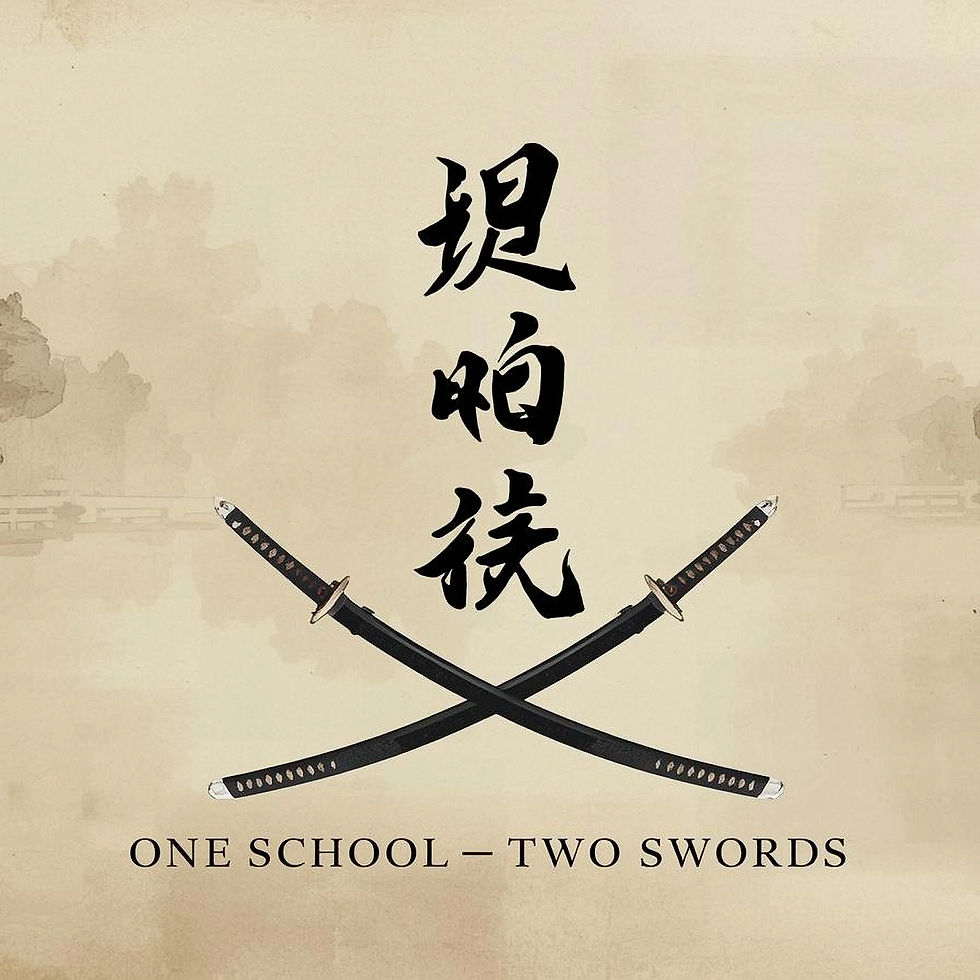
Warriors, both commanders and troopers, traditionally carry two swords: the long sword and the companion sword. This practice, known as "Nito Ichi Ryu," emphasizes the advantage of using both swords. While the spear and halberd are outdoor weapons, students at the Ichi school of strategy should train with a sword in each hand. It is essential to make full use of weaponry, as dying with an undrawn weapon is false to the warrior's Way. Holding a sword in one hand allows for greater freedom of movement, especially in difficult terrains or crowded situations. Although wielding a sword with both hands may be necessary in certain situations, mastery of one-handed use is crucial. Training with two long swords will develop the power to wield them effectively. The Ichi school teaches that victory can be achieved with any weapon, regardless of size, and using two swords is advantageous when fighting a crowd or capturing a prisoner. The essence of strategy is understanding that from one thing, ten thousand things can be known, and diligent study is required to attain this insight.
The Duality of Mind and Body in Martial Arts

In the realm of martial arts, the concept of duality is often represented through the metaphor of two swords, each symbolizing essential aspects of our existence. Picture the body as a long sword—an instrument of power, strength, and physical prowess, capable of delivering decisive strikes and defending against incoming attacks. The long sword, with its extended reach and formidable presence, embodies the physicality of our being, representing the tangible actions we take in the world. Niten Ichi-ryū is a distinguished classical Japanese sword school established by the legendary samurai Miyamoto Musashi, meaning "school of the strategy of two heavens as one."
On the other hand, envision the mind as a companion sword, a shorter, more agile weapon that complements the long sword's might. The companion sword symbolizes the intellect, intuition, and strategic thinking that guide our actions. It is this mental agility that allows us to navigate complex situations, anticipate our opponent's moves, and react with precision. Just as the companion sword is designed to be wielded alongside the long sword, the mind must operate in harmony with the body, creating a balanced approach to both combat and life.
These two elements—mind and body—are intricately linked, representing the two faces of a single coin that we refer to as spirit. The spirit embodies our essence, the driving force behind our motivations, desires, and aspirations. It is the unifying element that transcends the physical and mental dichotomy, suggesting that true mastery in martial arts, as well as in life, requires a deep understanding and integration of both the mind and body.
Mastery in life or martial arts demands a profound integration and understanding of both the mind and body.
The Philosophy of 'Ichi Ryu Ni Tho' School of Kenjutsu:
The 'Ichi Ryu Ni Tho' school of martial arts places a significant emphasis on the coordination of mind and body, advocating for a synchrony that is essential for achieving mastery in both combat and personal development. This philosophy teaches practitioners that success in martial arts is not merely about physical strength or technical skill; it is about cultivating a profound connection between one's mental state and physical actions.
In practice, this means that when a martial artist engages in combat, they must not only rely on their physical abilities but also tap into their mental resources. The practitioner learns to anticipate movements, read opponents, and respond fluidly, merging the long sword's power with the companion sword's finesse. This duality allows for a more holistic approach to fighting, where each movement is not just a reaction, but a thoughtful decision informed by a clear mind.
The Integration of Mind and Body in Daily Life
Beyond the confines of the dojo or battlefield, the principles of 'Ichi Ryu Ni Tho' extend into everyday life. The coordination of mind and body is equally applicable in various aspects of our lives, whether it be in personal relationships, professional endeavors, or self-discipline. By cultivating this dual awareness, individuals can approach challenges with a balanced mindset, ensuring that their actions are not impulsive but rather deliberate and calculated.
Practitioners are encouraged to engage in mindfulness practices that enhance their mental clarity, enabling them to remain present and focused. This mental discipline complements physical training, resulting in a well-rounded individual capable of facing life's adversities with resilience and grace.
The practice of mindfulness is the key ingredient that brings about amazing mind-body coordination!
Conclusion
In conclusion, the metaphor of the two swords—one representing the body and the other the mind—serves as a profound reminder of the necessity for balance and harmony in our lives. The 'Ichi Ryu Ni Tho' school teaches that mastery is achieved through the seamless integration of these two elements, allowing the spirit to flourish. By understanding and embracing the relationship between mind and body, individuals can not only excel in martial arts but also cultivate a richer, more fulfilling existence.
Get ready to dive into the exciting world of 'The Benefit of the Two Characters reading "Strategy," where you'll uncover the secrets of mastering the long sword and its strategic significance! But that's not all—next, we'll explore 'The Benefit of Weapons in Strategy,' shining a spotlight on the crucial role of timing and location in weapon use.
Don't miss out on these captivating insights!
Stay tuned! Tell us what you feel about this.
Please like, share & subscribe to our site!
Thank you so much!
Yadu,
On behalf of Get Inspired Spiritually.
#TheWayofSamurai #Japan #Zen #Philosophy #DeeperInterpretations #IchiRyuNiTho #TheWayofWarrior #YamamotoTsunetomo #Bushido #Wakizashi #Katana #MindBodyCoordination #Duality #Spirit #TheWayofStrategy #ShintoBuddhism


Comments