Deeper Elucidations of Vidura Neeti Part-9 | #mahabharata #sanathanadharma

The Mahabharata has been called the Panchama Veda—the Fifth Veda—because it gathers the essence of the Vedas into story. Beyond its legendary battles and timeless characters, it offers insights into science, statecraft, psychology, and the human condition itself. It is a mirror of life, reflecting both our struggles and our search for wisdom.
In this thrilling post, we dive into The Perils of Dishonor: Acts That Destroy Virtue and Tarnish Legacy, The Wisdom of Leadership: Balancing Justice, Dharma, and Forgiveness, and The Strength and Power of Forgiveness: A Path to Inner Resilience and Peace, as interpreted through the Dharma Shastras, Rajaneeti Shastra, and Bhagavad-Gita.
Overview of the Last Post:
Vidura, with a voice as sharp as an arrow, addresses King Dhritarashtra, highlighting the resilience and growth of the Pandavas despite their suffering. He contrasts this with Duryodhana's fragile reign, built on arrogance and treachery, questioning who will stand by him when his throne inevitably crumbles. Vidura warns that a king who governs through fear and greed will ultimately be destroyed by those he trusts. He emphasizes that true strength lies in earning respect, not instilling fear, and urges the king to reflect on his choices, which will shape the future of the realm.
Vidura stresses the importance of perseverance and the dangers of unchecked ambition. He questions the king about the true nature of wealth and health, suggesting that a kingdom's strength lies in justice, loyalty, and harmony, not in material riches. He concludes with a Sanskrit verse, emphasizing that knowledge leads to humility, worthiness, wealth, righteous conduct, and ultimately happiness. Vidura urges the king to follow the path of Dharma, guided by consciousness and awareness of one's duties.
The Story Continues....
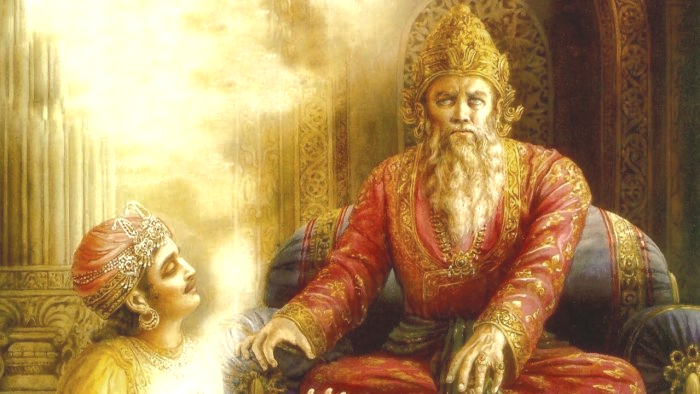
Dhritarashtra sat still, as if the lingering darkness of the departing night enveloped his soul. Vidura, patient and resolute, spoke on—his voice now resonating with the gentle, yet profound force of truths designed to heal and caution.
The Perils of Dishonor: Acts That Destroy Virtue and Tarnish Legacy

"There are three acts, O King, that destroy a man’s virtue, shorten his life, and tarnish his name: the theft of another’s wealth, the seduction of another’s wife, and the abandonment of a true friend. These grievous sins strip a man of his honor, and once honor is lost, what remains for a man to cling to in this world? Without honor, a man becomes like a ship adrift at sea, lacking a compass to guide him, vulnerable to the tempests of life that may sweep him away into obscurity.
The theft of another’s wealth not only signifies a violation of trust but also reveals a deep-rooted greed and a disregard for the rights of others. It is an act that can lead to a cycle of vengeance and retribution, leaving behind a trail of broken relationships and shattered lives.
Furthermore, the seduction of another’s wife is an act that transcends mere physical betrayal; it is a profound emotional violation that can devastate families and communities. This act is often driven by lust and selfish desire, ignoring the sanctity of marital bonds and the promises made between partners.
The Bhagavad Gita confidently identifies lust (Kama) as the primary adversary, born from the mode of passion (Rajo Guna). It resides in the senses, mind, and intellect, obscuring knowledge and leading to anger, greed, and self-destruction. However, it offers a powerful two-pronged solution: the outer regulation of senses and the inner redirection of love towards the Divine (Krishna) to achieve spiritual fulfillment.
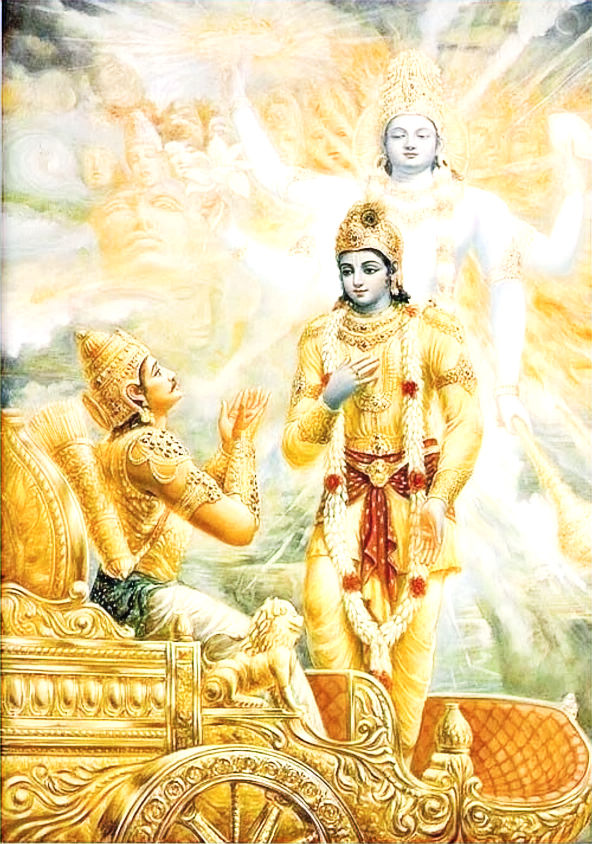
श्रीभगवानुवाच |
काम एष क्रोध एष रजोगुणसमुद्भव: ||
महाशनो महापाप्मा विद्ध्येनमिह वैरिणम् || 37||
śhrī bhagavān uvācha:
kāma eṣha krodha eṣha rajo-guṇa-samudbhavaḥ
mahāśhano mahā-pāpmā viddhyenam iha vairiṇam
BG 3.37: The Supreme Lord said: It is lust alone, which is born of contact with the mode of passion, and later transformed into anger. Know this as the sinful, all-devouring enemy in the world.
The seduction of another’s wife creates rifts that can never be fully mended, leading to a legacy of pain and distrust that can echo through generations. Lastly, the abandonment of a true friend is perhaps the most insidious of these acts, for friendship is a sacred bond that requires loyalty and support. To abandon a true friend in their time of need is to betray not only the individual but also the very principles of companionship and solidarity that underpin human relationships.
These three sins, then, do not merely tarnish a man’s name; they erode the very foundation of his character and integrity. Once honor is lost, what remains? A hollow shell, stripped of the virtues that define a good and righteous life. The man who engages in such acts may find temporary gain, but ultimately, he will be left with nothing but the burden of his own conscience and the scorn of society. It is a fate worse than death, for to live without honor is to exist in a perpetual state of shame and regret, a life devoid of respect and admiration.
Vidura’s gaze did not waver, steady and resolute, as he spoke the truth that weighed heavily on the hearts of many. "And yet, O King, what has Duryodhana done, if not all three?" His words hung in the air, a stark reminder of the actions taken by the prince that had led to such turmoil and strife. Duryodhana’s ambition and desire for power had driven him to commit acts that not only harmed others but also jeopardized his own standing in the eyes of the world. The theft of the Pandavas' rightful share, the attempts to seduce Draupadi, and his betrayal of his own kin were not mere incidents; they were manifestations of a deeper moral decay that threatened to engulf him.
Dhritarashtra’s face was a mask of turmoil. His breath was heavy, his lips parted as if to speak—but no words came.
The Wisdom of Leadership: Balancing Justice, Dharma, and Forgiveness

"A wise king, O King, protects his wealth and his kingdom as he would his own body. He nurtures it with Dharma, the righteous path that fosters moral and ethical conduct, ensuring that his subjects thrive in harmony and prosperity. He shields it with justice, administering fair laws that uphold order and protect the vulnerable, creating a society where trust and cooperation can flourish. Furthermore, he strengthens it with wisdom, seeking knowledge and understanding from his advisors and the lessons of history, allowing him to make informed decisions that benefit the realm.
But a foolish king, in stark contrast, he watches in silence as disease spreads through the land, allowing discontent and corruption to fester unchecked. He observes as decay sets in, not only within the physical boundaries of his kingdom but also within the hearts and minds of his people. By the time he finally decides to act, it is already too late; the damage is beyond repair, and the kingdom he once ruled with pride is now a shadow of its former self, crumbling under the weight of neglect and mismanagement."
"Ask yourself, O King—has the disease taken root? Has the malaise of apathy and disarray infiltrated your court, your cities, and the very spirit of your people? And if it has, will you muster the courage to cure it, taking bold and decisive actions to restore health and vitality to your realm… or will you choose to remain passive, letting it consume all that remains of your once-glorious kingdom, reducing it to mere memories of what it could have been?"
"There is but one flaw that men often see in forgiveness—and that flaw is not real but born of ignorance: they say that to forgive is to be weak. In truth, forgiveness is a profound strength, a testament to the resilience of the human spirit. It takes immense courage to release the burdens of anger and resentment, to extend a hand of compassion even when one has been wronged. A wise ruler understands that to forgive is to pave the way for healing, both for oneself and for the community at large. It is through forgiveness that broken bonds can be amended, and a path to reconciliation can be forged, allowing the kingdom to rise anew from the ashes of conflict. Thus, O King, do not shy away from the power of forgiveness; embrace it as a tool of strength that can fortify your reign and unite your people in a shared vision of peace and prosperity."
He paused, allowing Dhritarashtra to absorb the words.
The Strength and Power of Forgiveness: A Path to Inner Resilience and Peace

"But know this, O King: Forgiveness is not the refuge of the coward—it is the shining ornament of the strong. Only he who has mastered his own anger, his own pride, his own thirst for vengeance, can truly forgive. The weak forgive out of helplessness; the strong, out of wisdom and power. To forgive is to engage in a profound act of courage, an acknowledgment that while one has been wronged, the desire for retribution does not govern their heart. It takes a remarkable strength to rise above the instinctual response to retaliate, to choose instead the path of understanding and compassion. The truly strong understand that forgiveness is not a sign of weakness; rather, it is a declaration of their inner strength and resilience. It is a conscious choice to let go of the burdens of resentment and to embrace a more enlightened state of being, where harmony prevails over chaos."
"Forgiveness," he said, "is a force greater than the sharpest blade. It subdues the hearts of men, it calms the storms of hatred, it builds bridges where swords would only raise ruins. What is there in this world that cannot be achieved by one who carries forgiveness like a shield and a sword both? It is the catalyst for healing, not just for the one who is forgiven but also for the one who forgives.
By choosing to forgive, one liberates themselves from the shackles of bitterness and resentment, allowing for personal growth and emotional freedom.
In a world rife with conflict and division, the act of forgiveness becomes a revolutionary act, a powerful tool that can mend broken relationships and foster understanding among even the most disparate of individuals. It transforms adversaries into allies and paves the way for a future where peace reigns over discord. Indeed, what greater strength is there than the ability to rise above past grievances and extend a hand in reconciliation?"
Vidura’s gaze sharpened slightly, a knowing glint in his eye.
"The malicious find strength in violence," he said, his voice resonating with a deep conviction. "They wield fear as their weapon, believing that through intimidation and brutality, they can assert control over others. In stark contrast, the kingdoms and courts find their strength in law and rightful punishment, establishing order and justice within their realms. These institutions, built upon the principles of fairness and accountability, serve to protect the innocent and hold the wicked accountable for their actions. Women, the nurturers of life, hold strength in their boundless care and compassion, embodying the essence of empathy and support. They are the backbone of families and communities, providing love and guidance, fostering resilience and hope in the hearts of those around them. But the virtuous, O King—the truly great—they find their might in forgiveness, a power that transcends mere strength."
"The one who forgives when wronged," he continued, his tone softening yet remaining firm, "who shows mercy when he has the power to punish, who lifts up even those who have fallen into error—that man is like the rain-bearing cloud that waters both the field and the barren land without discrimination. He nurtures growth and healing, understanding that true strength lies not in retribution but in the ability to let go of past grievances. This act of forgiveness is not a sign of weakness; rather, it is a profound demonstration of inner strength and moral fortitude. He is the true sovereign, not just of a kingdom, but of human hearts, for he possesses the rare ability to inspire change and promote unity among those who have been divided by conflict. In his presence, the atmosphere becomes charged with hope, and the possibility of redemption shines brightly, illuminating the path for others to follow. Such a leader cultivates an environment where love, understanding, and reconciliation flourish, proving that the greatest victories are those won through compassion and mercy."
He allowed his words to linger, as the dawn settled fully into the room.
The Power of Forgiveness: A King's Dilemma and the Path to True Greatness

"And what of your son, O King?" Vidura asked quietly, almost sadly, his voice carrying the weight of unspoken truths. "Has he learned the profound and transformative power of forgiveness? Or does he still clutch at anger, mistakenly believing it to be a source of strength? Does he seek to build bridges of peace, fostering understanding and reconciliation, or does he yearn to burn his enemies to ash, consumed by the flames of vengeance and hatred?"
Dhritarashtra remained silent, his lips pressed together tightly as he absorbed Vidura's words. The silence stretched between them, heavy with unacknowledged emotions. Yet, Vidura, with his keen perception, could see the internal struggle etched upon the king's face—the grim tension, the wrestling of pride against the stirrings of regret. It was a battle that raged within him, a conflict between the desire to uphold his son’s fierce ambition and the dawning realization of the destructive path that anger could lead to.
"The sword of peace," Vidura said, his tone imbued with the wisdom of ages, "is mightier than the sword of war. It is a weapon that can carve out a future filled with hope and unity. And the king who forgives wisely, who chooses to embrace understanding over enmity, is the one whose name will be blessed for generations to come. In contrast, the king who cannot forgive will find that even his victories taste of ash, devoid of joy and fulfillment, and that his throne, however gilded, rests atop a graveyard of broken relationships and lost potential." The imagery was stark, a haunting reminder of the consequences of unchecked anger and the importance of mercy.
"So, ponder this well, O King," he said, his voice steady yet compassionate. "Teach your son, if you still can, that true greatness lies not in conquest, where one seeks to dominate and subjugate, but in restraint, where one learns to hold back the urge to retaliate. Not in cruelty, which only breeds more suffering, but in compassion, which can heal wounds and mend hearts. Not in the sword that strikes, causing pain and division, but in the hand that stays the blow, offering a gesture of peace and understanding. This is the legacy you should aspire to impart, a legacy of wisdom that transcends the fleeting nature of power and glory."
Stay tuned for the next episode of Vidura Neeti!
Please like, comment, share & subscribe to our site!
Thank you so much!
YaDu,
On behalf of Get Inspired Spiritually.
श्रीमध्वेशकृष्णार्पणमस्तु
#Vedas #Mahabharata #Panchamaveda #Hindu #Epics #Hinduism #Strength #Wise #Forgivness #SelfMastery #SanatanaDharma #Dharma #Duties #Wealth #Management #Wisdom #RajaneetiShastra #RajaDharma #Kauravas #Pandavas


Comments